Hall County Superior Court handles major criminal and civil cases within the county judicial system. Superior court records help the public review case activity, court proceedings, and legal filings related to superior court cases. Hall County Superior Court plays a major role in resolving serious legal matters that require judicial review. The court hears felony criminal cases, civil litigation disputes, family law matters, property conflicts, and other significant court proceedings. Many residents search superior court records to check case status, review filed documents, or verify court decisions. These records create an official record of legal actions filed before the court. Public court records provide valuable information for attorneys, businesses, researchers, and members of the public seeking case-related details.
Hall County Superior Court records support transparency within the local judicial system through organized case management and recordkeeping practices. Superior court cases often involve multiple hearings, motions, orders, and final judgments that become part of the official court file. People search these records to review legal matters, monitor active cases, research litigation history, or confirm court outcomes. Search tools and court databases make it possible to locate available records using case numbers, party names, filing dates, and other search criteria. These records remain an important source of information for anyone researching court proceedings in Hall County.
How to Use the Hall County Superior Court Case Search
The Hall County Superior Court Case Search tool provides online access to public court records through the Hall County Court system. Users can search cases by party name, case number, filing date, or other available identifiers to view docket information, case activity, and filing records. Follow the steps below to complete a search.
Open the Official Docket Search Website
The Hall County online docket portal provides public access to Superior Court case information. Users can search records, review case activity, and access docket information through the official online search system.
Select Superior and State Courts
After opening the website, click Superior and State Courts. This section contains records for cases handled by these courts and directs users to the appropriate case search page.
Choose Civil or Criminal
Select the division that matches the case type before searching. Choosing the correct category helps narrow results and improves search accuracy within the court database.
Select Civil for:
- Divorce cases
- Property disputes
- Contract disputes
- Family law matters
- Civil lawsuits
Select Criminal for:
- Felony cases
- Criminal charges
- Indictments
- Criminal proceedings
Select a Search Method
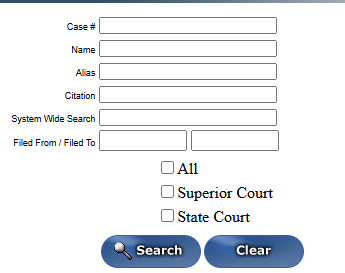
Choose a search option based on the information available. The system supports several search methods that help users locate specific court records more efficiently.
Available search methods:
- Party Name
- Case Number
- Filing Date
- Citation Number
- Alias
- CSE Number
Search Cases by Party Name
Use this option when a case number is unavailable. Enter the first and last name of a person or business involved in the case and review matching results.
Tips:
- Use full names
- Check spelling carefully
- Review all matching records
Search Using Case Number
Case number searches provide the most accurate results. Enter the complete case number exactly as listed on court documents to locate the correct case record.
Benefits:
- Fast results
- Accurate matching
- Direct record access
Search by Filing Date
The filing date option helps users find cases filed during a specific period. This method is useful for researching recent filings and reviewing historical court activity.
Common uses:
- Recent filings
- Historical searches
- Court activity reviews
Open the Case Record
After finding the correct result, open the case record to view detailed information. The record contains important case details and publicly available court information.
Information may include:
- Case number
- Filing date
- Case type
- Party names
- Assigned judge
Review Docket Information
The docket section displays a timeline of actions taken in the case. Users can monitor filings, court orders, motions, and status changes recorded by the court.
Docket details may include:
- Docket entries
- Filing records
- Court orders
- Case activity
- Status updates
Check Hearing Schedule and Court Calendar
Review the hearing schedule to see upcoming court appearances and events. This section helps users stay informed about important dates related to the case.
Users may find:
- Hearing dates
- Trial schedules
- Court appearances
- Calendar events
Types of Cases Handled by Hall County Superior Court
The Hall County Superior Court manages serious felony prosecution and high-value civil actions for local residents. This court serves as the primary location for resolving significant legal disputes involving property, family law, and major crimes.
Types of Cases
The court manages many superior court cases to maintain order and justice within the local community. Judges oversee criminal proceedings for serious offenses and settle civil actions between private parties. Every legal process ensures that all legal disputes receive a fair hearing under state law. People visit the courthouse for matters involving large sums of money or life-changing family issues. For example, a business owner might sue a partner to protect their investment. Every case follows specific rules to protect the rights of everyone in the legal process. Then, this structure helps resolve conflicts effectively for the entire community. Plus, the court maintains public safety by handling high-stakes matters with transparency.
Felony Criminal Cases
The Superior Court holds exclusive authority over all felony cases within Hall County. These criminal proceedings involve serious offenses that carry potential prison sentences of one year or more. Judges manage felony cases that involve major crimes such as robbery, drug trafficking, or aggravated assault. These matters begin when the district attorney presents an indictment to a grand jury for a formal vote. A defendant attends an arraignment to hear their criminal charges in front of a judge. For instance, the court handles judicial hearings to review evidence and set bond amounts for the accused. The judge oversees each step from the initial prosecution through the final sentencing phase. So, this process keeps the community safe by addressing the most serious crimes through the law.
Civil Litigation Cases
Civil litigation addresses disputes where one party seeks a remedy for a specific wrong. These civil actions begin when a plaintiff files a lawsuit to recover money or stop a harmful action. The defendant provides a legal response to the legal claims made against them in the filing. Then, judges oversee these matters to determine if the plaintiff deserves damages for their financial losses. Court litigation provides a fair way for businesses and residents to settle expensive disagreements. For example, a person might seek payment for medical bills after a major car accident. The court issues a ruling that provides a final legal answer to the conflict. Plus, many parties reach a settlement before the trial starts. So, this system keeps the local economy running smoothly.
Family Law Matters
Superior court judges manage sensitive family law matters that affect the daily lives of local households. They oversee divorce proceedings to settle the division of assets and debts between spouses. Many cases involve child custody decisions to find the best living situation for children. The court issues support orders to make sure parents provide for the financial needs of their kids. These family disputes require a clear legal path to reach a lasting agreement for all parties. Rulings from the bench help families move forward with legal certainty and peace. For example, a judge might decide which parent keeps the family home to protect the children. So, the legal system provides stability during stressful times for parents. Then, the court finalizes these agreements to make them legally binding.
Property and Real Estate Disputes
Property litigation involves serious legal battles over land rights and building ownership in the region. The court resolves ownership disputes when neighbors or businesses disagree about where property lines sit. Land claims require a review of old deeds and survey maps to find the truth. Judges decide cases involving easements that grant someone the right to use another person’s land. These court actions provide a clear answer to complex property issues for local homeowners. Settling these matters protects land values and ensures that public records remain accurate for everyone. For instance, a clear ruling stops a neighbor from building a fence on someone else’s land incorrectly. Plus, a final court order provides peace for buyers during a real estate sale. Then, these decisions prevent future fights over the same piece of land.
What Are Superior Court Records?
Superior court records are official documents created during court proceedings. These superior court records contain information about cases, hearings, filings, rulings, and final decisions. They help individuals, attorneys, and researchers access accurate case information and follow the progress of legal matters. Records may include court documents, motions, evidence, judgments, and other filings submitted to the court. While many records are publicly available, some may be restricted due to privacy laws or court rules. Accessing these records can help users review case details and verify legal outcomes.
Criminal Court Records
The office keeps permanent case files for every felony crime prosecuted within the county. These superior court records contain the original indictment and the final verdict for each defendant. Lawyers often check these judicial records to see the history of a person during a trial. Any person can request copies of these court documents to see the criminal charges and the resulting sentence. This data helps people see how the court manages serious crimes like robbery or fraud. Transparency in these legal filings keeps the community informed.
Civil Court Records
Civil court documentation includes every paper filed for lawsuits involving money, contracts, or personal injuries. These superior court records help people see how a plaintiff and defendant resolved their legal fight. Most case files remain open so the public can see who won a specific judgment or settlement. People use these judicial records to check for liens or past business disputes before signing a new deal. Following these legal filings provides a clear picture of how local businesses handle their disagreements in the open. Then, these files help people prepare for their own legal needs.
Orders and Judgments
Judges sign official papers called orders and judgments to finish a legal matter for good. These specific court documents give the final word on who wins a case or receives money. People often need certified copies of these superior court records to prove a house sale or a divorce. The clerk places these judicial records into a permanent book for safety and long-term storage. These case files represent the actual law applied to a specific set of facts for a resident. Checking these papers confirms the final result of any hearing or trial.
Public Record Availability
Most superior court records stay available for viewing during normal business hours at the local courthouse. Residents can use online portals to search for court documents from their own home computers. Small fees often apply for printing or certifying the official court documentation for personal use. The clerk makes sure these judicial records stay organized so people can find them by a case number. This open system allows everyone to see how the local government functions behind closed doors. Public access to legal filings remains a fundamental right for every citizen in the county.
Criminal Proceedings in Hall County Superior Court
Hall County Superior Court manages criminal proceedings for felony cases from the initial charge through the final sentence. This legal path includes several stages like the indictment and the trial to protect the rights of the accused and the community.
Filing of Criminal Charges
Legal action begins after an arrest by local police for a major crime. Prosecutors review the evidence so they can see if the case fits the standards for felony cases. The District Attorney presents an indictment to a grand jury for official approval. This step confirms that enough evidence exists so the matter can move forward. The clerk files the charges to start the formal court record. Clear charges allow the defense to prepare a response to the claims made by the state. This starts the case properly.
- Police take the person into custody.
- The District Attorney reviews the police reports.
- A grand jury evaluates the strength of the evidence.
Court Hearings
Every defendant attends an arraignment to hear the formal charges against them in public. During this time, they tell the court if they plead guilty or not guilty to the crime. The judge sets a schedule so the parties can share evidence and facts later. A plea hearing occurs if the defense and state reach an agreement before a trial. These meetings help the judge manage the calendar. This work prevents the court system from getting slow. Every meeting stays open to the public to ensure transparency for the law.
Trial Process
Trials give both sides a chance so they can present evidence to a jury of local citizens. Lawyers call witnesses to testify about what they saw or heard during the crime. The jury looks at physical evidence like photos, weapons, or documents. The state must prove the defendant is guilty beyond a reasonable doubt to win. This part of the criminal proceedings represents the core of the justice system. It protects people from unfair punishment by requiring real proof. Jury members deliberate before announcing their final verdict.
- Jury selection begins with local citizens.
- Witnesses testify under oath before the court.
- The jury reaches a verdict of guilty or not guilty.
Sentencing Procedures
After a conviction, the court moves to the sentencing phase to determine the punishment. The judge listens to arguments from both sides about the character of the defendant. They look at the law to see the range of prison time or fines allowed for the crime. Victims often speak about how the crime changed their lives forever. The judge signs a final order so the defendant knows the exact consequences. This final step provides closure for the victims and the local community. State standards help keep punishments fair for everyone.
Civil Litigation Process in Superior Court
The civil litigation process in Superior Court follows a structured path to resolve private disputes between parties. This system allows a person or business to file civil actions to seek payment or specific court orders for harm suffered.
Filing a Civil Lawsuit
The legal process starts when a plaintiff initiates a complaint filing with the Clerk of Court. This document outlines the legal claim and explains why the defendant should be held responsible for damages. A process server delivers the papers so the defendant has a chance to respond within thirty days. If the defendant misses this deadline, the court may rule in favor of the plaintiff immediately. This initial phase sets the stage for all future civil actions by defining the scope of the disagreement. This starts the case properly.
Discovery Process
Both sides enter a phase called discovery to gather evidence and facts about the case. Lawyers send written questions and request documents like emails or bank statements to build their arguments. They take depositions where witnesses answer questions under oath before the trial starts. This exchange makes sure no surprises happen once the parties stand in front of a judge. Sharing information helps both sides see the strengths and weaknesses of their position. This preparation takes several months for most civil litigation cases for the local court.
- Interrogatories involve written questions for the other party.
- Depositions provide recorded testimony from key witnesses.
- Requests for production allow for the review of physical evidence.
Settlement Discussions
Judges often require parties to meet for mediation before they can go to trial. This process involves a neutral person who helps both sides find a compromise to end the fight. Reaching a settlement saves time and money for everyone involved in the dispute. If the parties agree on a solution, they sign a contract to dismiss the case forever. Most civil actions end this way instead of going before a jury. This method gives the parties more control over the final result for their family or business.
Court Decision and Judgment
If no agreement occurs, the case moves to a trial where a judge or jury hears the evidence. They weigh the facts and decide if the legal claim has merit under the law. The court then issues a final court judgment to record the official outcome of the trial. This document states exactly how much money the defendant must pay to the plaintiff. A judgment provides a legal path so the winner can collect their funds or property. This final order closes the civil litigation file for the county records.
- The judge clarifies the law for the jury members.
- Juries determine the amount of money for damages.
- The clerk records the decision in the public file.
Jury Trials in Hall County Superior Court
Residents participate in the justice system by serving on a jury trial for criminal and civil cases. The Hall County Superior Court relies on local residents to hear evidence and deliver a fair verdict based on the law. A jury trial represents a fundamental part of the legal system where local residents decide the outcome of serious cases. The court sends out a jury summons to notify citizens of their duty to appear at the courthouse. These trial proceedings ensure that a person’s peers evaluate the facts rather than a single government official. Participation in jury service keeps the court connected to the values and common sense of the local community. It helps protect rights for every person involved.
How Jury Trials Work
Trial proceedings follow a strict set of courtroom procedures to keep the process orderly and fair for everyone. The judge explains the rules of law and the lawyers present their side of the story through witnesses. Both the plaintiff and the defendant have the chance to tell their version of events in the open courtroom. This process allows the community to see exactly how the law applies to real-life situations. The structure prevents bias and ensures that only relevant facts influence the final outcome.
- Opening statements outline the main arguments.
- Witnesses answer questions under oath.
- Closing arguments summarize the evidence.
Jury Selection Process
The juror selection phase involves a process where lawyers and the judge interview potential participants from the community. This step ensures that people with personal connections to the case do not serve on the final panel. The court looks for people who can remain neutral and listen to the evidence without making up their minds too early. Citizens who receive a jury summons must report to the courthouse to participate in this screening. A final group of twelve people usually sits for felony criminal cases.
Responsibilities of Jurors
People performing jury service must pay close attention to all testimony and evidence presented during the trial. They cannot discuss the case with their family or look up information on the internet until the trial ends. Their main job involves deciding which facts are true and which witnesses are the most believable. They must follow the instructions provided by the judge regarding the exact laws of Georgia. This job ensures that the final decision rests on the evidence shown in the courtroom rather than outside rumors.
- Jurors must stay silent about the case.
- They take an oath to be fair.
- Members focus on the provided evidence.
Trial Verdict Procedures
After hearing all arguments, the jury moves to a private room to discuss the case and reach a decision. They must stay together until they agree on a final verdict according to the judge’s instructions. In a criminal jury trial, the decision usually must be unanimous to find a defendant guilty of the charges. Once they reach an agreement, the foreperson signs the paperwork and the court announces the result in public. This final step brings the case to a close for the parties involved.
Court Hearings and Scheduling Information
Hall County Superior Court schedules various court hearings to resolve motions and update the status of legal cases. Parties can check official courtroom schedules online or at the clerk’s office to confirm their required arrival times. The court system uses a formal judicial calendar to manage the volume of cases entering the building. These court hearings provide a space for judges to make decisions on specific legal questions. For example, a judge might decide if a piece of evidence can be shown at a trial. This work keeps the process moving smoothly for the people involved. Each day, the court staff organizes these events to ensure the law works correctly. Public safety and fairness depend on this organized schedule for everyone.
Types of Hearings
The court holds different sessions to keep cases moving toward a trial or settlement. Judges preside over motion hearings where lawyers argue for specific legal rulings before the case goes further. Status conferences allow the judge to check on the progress of evidence sharing between the parties. In fact, these meetings keep the judicial calendar organized and prevent long delays for the people involved. Each session serves a specific purpose in the legal process. This helps the court finish cases in a timely manner for every family and business.
- Bond Hearings: Judges decide if a person can leave jail while waiting for trial.
- Motion Hearings: Lawyers ask for specific rules on evidence or trial dates.
- Arraignments: Defendants hear their formal charges and enter a plea.
Finding Scheduled Hearings
Residents can find their specific hearing dates by visiting the official website for Hall County courts. The clerk posts updated courtroom schedules every day to show which cases go before the judge. Lawyers and the public check the judicial calendar to see the time and room number for every event. It is helpful to look for the case number or the names of the people involved. This system allows everyone to stay informed about their legal requirements. For instance, checking the night before prevents missing an early morning start time.
- Search the online court portal by the specific case number.
- Check the daily dockets posted at the courthouse entry doors.
- Call the Clerk of Superior Court for direct scheduling help.
Hearing Attendance Requirements
Parties involved in a case must arrive early for all court hearings to avoid missing their turn. Dress professionally and follow all rules while inside the building. The judge expects every person to be ready when the bailiff calls their case name. Missing a date on the judicial calendar can result in a warrant or a loss of the case. Being present shows the court that people take the legal process seriously. In fact, arrive ten minutes early to go through security. The court staff can answer questions about where to sit.
- Turn off all cell phones before entering the courtroom.
- Do not bring food or drinks into the legal space.
- Stand up when the judge enters or leaves the bench.
- Wait for the judge to ask you to speak before talking.
Judicial Review and Court Decisions
The court performs judicial review to check if local government actions follow the state laws. These official court rulings provide a final judicial determination for disputes involving residents and local boards.
What Judicial Review Means
The process of judicial review involves a judge checking the actions of government agencies. During a case evaluation, the judge looks for mistakes in how a board applied the law. This work makes certain that every official step stays within the limits of the state constitution. People use this path to challenge rules they feel are unfair or wrong. So, this oversight protects the rights of every resident against government errors. Plus, this check provides a clear path for justice. Then, the court confirms if the original decision was right.
Court Orders and Decisions
Official court rulings carry the full weight of the law and tell parties what they must do next. A judge makes a judicial determination based on the evidence shown during the trial. These legal decisions settle big fights over money, land, or criminal charges for the public record. The clerk files these papers so the results stay transparent for everyone to see. Often, these orders include dates for paying money or moving property. This clear language helps residents follow the rules. Then, the case reaches a formal end for the party. So, this helps maintain order.
Appeals and Further Review
If a party thinks court rulings contain a mistake, they might ask for an appeal. This step leads to a new case evaluation by a higher court in the state system. These higher judges look for legal errors in the original judicial determination to see if the trial was fair. Still, most Superior Court legal decisions stay final for most local issues. This system provides a way to double-check the law when a resident feels a mistake happened. Then, the higher court issues its own ruling to finish the matter. So, the process stays fair for all residents.
| Decision Stage | Outcome |
| Case Evaluation | Judge reviews facts and law |
| Judicial Determination | Court reaches a final choice |
| Court Rulings | Formal orders are issued |
| Appeals | Higher court checks for errors |
Accessing Hall County Superior Court Records
Residents obtain superior court records through the office of the court clerk or through official digital portals. This public court record access allows people to view legal documentation for criminal and civil cases filed within the county. The court clerk manages a vast library of files for every case heard in the building. Residents use a public records request to see how the court handled past disputes or crimes. Then, this court record access provides a transparent look at the local justice system for everyone. Searching superior court records helps people gather facts for their own business or family needs. Plus, these pieces of legal documentation stay open for public view during normal business hours each week. This system helps the community stay informed about the law.
Online Access Options
Many people view superior court records from home using the digital search portal on the county website. This system provides a fast way to find legal documentation without traveling to the courthouse in person. Then, users search for files by typing in a case number or a party name. This digital method stays available at all hours for the convenience of the public. Plus, residents see the history of a case and read various filings directly on their computer screen. This remote search tool helps keep the legal process open to all.
In-Person Record Requests
People visit the courthouse to submit a public records request in person at the front counter. Then, the court clerk helps visitors find specific superior court records stored in the physical archives. This face-to-face contact helps when a case file is old or hard to find using a computer. So, staff members provide terminals in the lobby for public use during the work day. Later, visitors read through original legal documentation to verify facts or track historical data for their research. This physical service remains a helpful tool for the community.
Requesting Certified Copies
Some people need certified copies of superior court records for employment or housing needs. These papers carry an official seal from the court clerk to prove they are real and accurate for third parties. Then, a public records request for these items requires a small payment for the clerk to stamp the pages. These official versions of legal documentation serve as proof of a final decision. Plus, these papers provide legal certainty for many situations like showing a divorce is final. This formal paperwork provides the official proof needed for many banks.
Record Search Fees
The clerk charges one dollar per page for standard copies of most superior court records. Plus, certified copies cost two dollars and fifty cents for the first page and fifty cents for each page after that. These prices match the set rates for every court clerk across the state. Then, people pay with cash or cards to get their official legal documentation at the window. This money pays for the paper and the time spent finding the file. So, these small costs help the office keep accurate records for the public.
| Service Type | Estimated Cost | Delivery Method |
| Standard Copies | $1.00 per page | In-Person / Mail |
| Certified Copies | $2.50 first page / $0.50 others | Official Seal Included |
| Online Viewing | No charge for index | Digital Portal |
| Search by Clerk | $10.00 per name | Results provided by staff |
Location and Contact Information
The Hall County Superior Court location sits inside the Hall County Government Center in downtown Gainesville. This court building operates during standard business hours to assist residents with legal filings and case information. The Hall County Superior Court location is easily accessible for individuals seeking court services, records, and case assistance. Visitors can use the courthouse for filing legal documents, attending hearings, obtaining court information, and accessing public records. The facility serves as a central location for handling a wide range of superior court matters within Hall County.
Superior Court Address
The Hall County courthouse resides within a large government facility that houses several county departments. This central spot allows people to handle multiple tasks in one trip to the downtown area. In fact, confirming the courthouse address prevents visitors from going to the wrong building on their court date. So, many people check the map before they leave home to save time.
- Physical Location: 225 Green Street SE, Gainesville, GA 30501.
- Building Name: Hall County Government Center.
- Public Access Entrance: The main doors face Green Street SE.
Court Hours of Operation
The court offices follow a set schedule to provide services to the public every week. Staff members work at the public counter to process new documents and answer questions. Plus, it is helpful to arrive before the final filing window closes for the day. Also, the staff stops processing certain long requests shortly before the building closes.
- Business Days: Monday through Friday.
- Office Hours: 8:00 AM to 5:00 PM.
- Holiday Schedule: The court closes for all state-recognized holidays.
Contact Information
Residents use the court contact information to reach specific departments for help with their cases. The clerk office handles most assistance requests regarding records and payments. Actually, good customer service ensures that callers get the correct data for their legal needs. Then, the staff directs calls to the proper judge or department as needed.
- Main Phone Line: 770-531-7025.
- Mailing Address: P.O. Box 1275, Gainesville, GA 30503.
- Primary Department: Clerk of Superior Court.
Directions and Parking Information
The courthouse directions lead visitors to the heart of the Gainesville business district. There is visitor parking in the parking deck located right across the street from the court building. For example, the courthouse entrance includes ramps for people with mobility needs. Plus, public transportation routes stop near the building to make the government facility easy to reach.
Frequently Asked Questions
The following answers provide a quick look at the functions and services of the Hall County Superior Court. This information helps residents find records and prepare for their visits to the courthouse.
What cases are handled by Hall County Superior Court?
The Hall County Superior Court manages felony prosecution and major civil actions for local residents. This court serves as the primary location for resolving significant legal disputes involving property and family law. Judges hear cases involving armed robbery, land fights, and child custody. These significant matters require a formal judicial determination to protect the rights of everyone. Then, the court provides the final word on these high-stakes issues. This work helps maintain order across the county.
How do I search Hall County Superior Court cases?
Residents use the online court portal or visit the courthouse lobby to find specific court records. Most people search by using a party name or a case number to get the best results. The digital system stays open at all hours so people check case statuses from home. Users see the history of a case and read various legal filings on their screens. Plus, people download documents to keep for their own records. If the online tool lacks a file, the court clerk helps find paper records in the archives.
Are Superior Court records public?
Most court documents remain open for public viewing according to state laws. Anyone can request to see these papers unless a judge decides to seal the file for privacy reasons. Public access makes sure the justice system stays honest and open for every resident. People view these files to research property history or verify legal outcomes for their own needs. Then, the clerk provides copies of these papers for a small fee upon request. This transparency builds trust within the local community.
How do I obtain certified court documents?
People obtain certified copies by visiting the office of the court clerk and paying a small fee. These papers feature an official seal that proves the records are real and accurate for other agencies. You might need these files for banks or government offices to prove a legal outcome. The clerk stamps the paper to make it an official record. This process provides the formal proof needed for your personal files. For instance, a certified decree helps change a name on a driver’s license.
How can I find court hearing dates?
Find hearing dates by checking the online judicial calendar on the official Hall County website. The clerk also posts daily courtroom schedules on the walls near the entry doors. These calendars show the time and the room number for every scheduled event. Checking the list the night before helps you arrive on time for your case. If a person cannot find their name, they call the clerk office for direct help. This keeps the legal schedule on track for everyone involved.