Hall County Court Records serve as the definitive source of information for all official legal proceedings managed within the local judicial system. These public court records are frequently sought after by individuals who need to conduct background checks, verify legal outcomes, or gather specific judicial information for research purposes. The importance of having easy access to these documents lies in the transparency they provide, allowing the public to monitor how laws are being enforced and interpreted locally. By documenting every case, the system creates a reliable archive that reflects the history of the county’s justice department. Whether you are looking for criminal histories or civil filings, these records are fundamental to understanding the local legal landscape and ensuring that all residents have access to necessary data.
Hall County Courts manage a vast array of cases including criminal trials, civil lawsuits, family law disputes, and probate matters involving local estates. These courthouse records are essential tools for legal professionals and the general public alike, ensuring that the details of every litigation are preserved for future reference. Beyond just documenting trials, the court services provide a quick overview of hearing schedules, traffic infractions, and various administrative filings through the clerk’s office. Maintaining open access to these dockets is crucial for upholding the principles of a fair and accountable justice system within the community. Modern digital platforms have made it easier than ever to search for specific case details, making the navigation of local law more accessible and efficient for everyone involved in the legal process.
How to Access Hall County Court Records
Hall County court records can be searched online through the official court docket system, requested in person at the courthouse, or obtained through the Clerk of Court. Public records may include case details, court dockets, hearing dates, filing history, judgments, and other court documents that are available for public inspection.
Official Hall County Court Records Search Portal: https://docket.hallcourts.com/
Online Record Search
The Hall County online records portal provides the fastest way to search court records. Users can perform a court lookup by case number, party name, filing date, or case category. The public access system contains records from the Superior Court, State Court, and Magistrate Court databases.
How to Search Hall County Court Records Online
- Visit the official court records portal: https://docket.hallcourts.com/
- Select the appropriate court:
- Superior and State Courts for civil, criminal, family, divorce, and traffic cases.
- Magistrate Court for small claims, evictions, garnishments, and landlord-tenant matters.
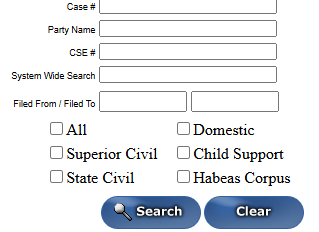
- Enter one of the available search criteria:
- Case Number
- Party Name
- Filing Date
- Case Type
- Select a case category if needed:
- All
- Superior Civil
- State Civil
- Domestic
- Child Support
- Habeas Corpus
- Click the Search button.
- Review the list of matching cases.
- Select the desired case to view:
- Court docket
- Filing history
- Hearing dates
- Case status
- Court orders
- Public filings
For the most accurate record search results, users should enter the exact case number whenever available.
In-Person Requests
Some court documents may not appear in the online records portal. In these situations, records can be requested directly from the Hall County Courthouse. This option is commonly used for certified copies, archived files, older records, and documents requiring identity verification before release.
Before visiting the courthouse, requesters should bring:
- Case number
- Full party name
- Filing year
- Valid identification
- Payment method for copy fees
Providing complete information helps courthouse staff locate records more efficiently.
Clerk of Court Assistance
The Clerk of Court maintains many official Hall County court records and assists with public record requests. Staff members can help locate case files, explain copy fees, process certified document requests, and answer questions about record availability.
Clerk services include:
- Court record searches
- Certified copies
- Docket requests
- Filing information
- Case verification
- Public records assistance
Public Access Terminals
Visitors can use public access terminals located inside the courthouse to perform a court lookup. These computer stations connect directly to the court database and allow users to search available records without creating an online account.
Users can search:
- Case summaries
- Court dockets
- Filing records
- Hearing schedules
- Public case information
Records Request Procedures
Most court record requests follow a standard process. Users must identify the case, submit the required information, and pay applicable fees before records are released.
Records Request Process
- Locate the case through the online records portal.
- Record the case number and case title.
- Contact the Clerk of Court if copies are needed.
- Submit the request form when required.
- Pay any copy or certification fees.
- Receive records electronically, by mail, or in person.
Certain records may be restricted by court order or state law. Juvenile cases, adoption records, sealed files, and other confidential matters may not be available for public viewing.
Types of Hall County Court Records Available
The judicial system in Hall County generates a diverse range of documentation through its various specialized courts. Understanding the specific nature of these court filings is essential for any researcher or legal professional.
Civil Court Records
Hall County civil court records document the formal resolution of legal disputes between private parties, such as individuals or corporations. These filings typically involve claims for financial compensation or requests for specific legal actions rather than criminal punishment. Most civil cases in the county are processed through the Superior or State Courts, where detailed documentation of complaints, evidence, and final judgments is maintained. These records are essential for tracking litigation history, verifying property claims, and ensuring that all parties adhere to legally binding agreements made during the trial process.
- Personal injury and tort lawsuits
- Breach of contract claims
- Property and land disputes
- Employment and labor litigation
Criminal Court Records
Hall County criminal court records provide a comprehensive history of all criminal proceedings occurring within the county. These court filings track an individual’s journey through the justice system, starting from the initial arrest and indictment to the final sentencing or acquittal. Whether the case involves a serious felony or a minor misdemeanor, the clerk’s office preserves every motion, plea, and order. These documents are vital for conducting background checks, as they offer transparent insights into past offenses, bond conditions, and the rehabilitation requirements imposed by the local judiciary.
- Felony and misdemeanor charges
- Arrest warrants and indictments
- Sentencing and probation orders
- Plea bargain agreements
Traffic Court Records
Traffic court records in Hall County are maintained to track motor vehicle violations and local ordinance infractions. While many people view these as minor, they remain a permanent part of the judicial record and can impact insurance rates or driving privileges. These files include citations for speeding, reckless driving, and driving under the influence. Accessing these dockets allows the public to view the outcome of specific tickets and verify if fines have been paid or if community service was successfully completed by the defendant.
Family Court Records
These records encompass a wide variety of family law cases that address sensitive domestic relationships and household legalities. Hall County maintains documentation for divorce proceedings, child custody arrangements, and spousal support disputes. Because these files often contain private information regarding minors or financial assets, some details may be redacted to protect the parties involved. However, the core legal decrees remain public, serving as the official record for verifying marital status, legal guardianship, or the specific terms of a parental visitation agreement reached in court.
- Divorce decrees and annulments
- Child support and custody orders
- Adoption and paternity records
- Legal separations and domestic motions
Probate Court Records
Records concerning probate matters focus on the administration of estates, the validation of wills, and the protection of incapacitated adults. When a resident passes away, the Probate Court documents the distribution of their assets and the appointment of executors to manage the estate. These files are crucial for genealogical research and for clearing titles to inherited property. Beyond death records, this court also manages marriage licenses and firearm permits, making it a vital hub for residents who need official documentation for various personal legal requirements.
Small Claims Cases
Small claims records are managed by the Magistrate Court and involve civil cases where the disputed amount is under a specific financial threshold, typically fifteen thousand dollars. These files are often less formal than Superior Court proceedings but are equally important for resolving everyday conflicts. Typical records in this category include landlord-tenant disputes, unpaid personal loans, and minor service contract disagreements. Because the process is designed to be accessible without an attorney, these records provide a clear, easy-to-read history of how the local magistrate resolved the conflict.
Juvenile Records
Juvenile records are handled with a high degree of confidentiality to protect the privacy and future opportunities of minors involved in the legal system. Unlike adult criminal or civil files, these records are generally sealed and not available for public inspection through the standard online portal. Access is strictly limited to the minor, their parents, or authorized legal representatives. These files cover delinquency cases and dependency issues, ensuring that the focus remains on rehabilitation and the best interests of the child rather than public exposure.
What Are Hall County Court Records?
Hall County Court Records constitute the comprehensive body of legal records generated throughout the life of any case within the county’s judicial system. These documents serve as the official memory of the court, capturing every motion, evidence submission, and judge’s ruling from start to finish. From the initial filing of a complaint to the final entry of a decree, these case files provide a verbatim account of the arguments and decisions made. This judicial documentation ensures that there is a permanent, verifiable history of all legal actions taken.
Why Court Records Matter
Hall County Court Records are vital for maintaining the integrity and transparency of the local government. By allowing citizens to review court archives, the system ensures that judges and attorneys are held accountable for their actions and that the law is applied consistently. For individuals, these records are essential for proving legal status, such as the finalization of a divorce or the resolution of a debt. On a broader scale, they provide the necessary data for researchers to track trends in local crime or civil litigation.
- Ensures judicial accountability and transparency.
- Provides legal proof of case outcomes and settlements.
- Supports background checks for employment and housing.
- Facilitates historical, genealogical, and legal research.
Who Can Access Court Records?
Under the principle of open government, Hall County Court Records are generally considered public records, meaning they are accessible to almost any member of the community. General citizens, journalists, legal professionals, and private investigators frequently access these files to gather information or conduct institutional oversight. In Hall County, the Clerk of Superior Court manages the repository, providing both physical and digital access points. While most people can view these files for free, a nominal administrative fee is typically required for those who need certified copies.
Public vs. Restricted Records
While the majority of Hall County Court Records are open to the public, certain legal records are restricted to protect sensitive or private information. These “sealed” or “confidential” records are generally those where the individual’s right to privacy outweighs the public’s right to know. For instance, case files involving minors or sensitive medical data are typically shielded from public view. Understanding the difference between these categories is crucial for anyone navigating the system, as it prevents the unauthorized disclosure of private details while maintaining institutional transparency.
- Public Records: Criminal trials, civil lawsuits, property liens, and divorce decrees.
- Restricted Records: Juvenile delinquency cases, adoption files, and mental health proceedings.
- Redacted Information: Sensitive data like Social Security numbers or bank account details within public files.
Hall County Cases & Dockets Search
Hall County Cases & Dockets are essential navigational tools that provide a chronological summary of every action taken within a specific legal matter. Think of a docket as a formal logbook or index that tracks the lifespan of a case from the moment it is filed until its final resolution. By using a docket search, individuals can quickly see which motions have been filed, which orders have been signed, and the current standing of the parties involved. This system ensures that the legal process remains organized, transparent, and accessible to the public.
Information Found in Docket Records
When conducting a case lookup within Hall County Cases & Dockets, you will encounter a wealth of specific data points. These records typically include the names of the plaintiffs and defendants, the assigned judge, and a list of all filed documents. Each entry acts as a timestamp for the legal process, showing when hearings occurred or when evidence was submitted. This level of detail is vital for litigation tracking, allowing legal professionals and the general public to understand the procedural history and the specific legal arguments being presented in real-time.
- Names of parties and legal counsel.
- Assigned presiding judge and courtroom number.
- Detailed list of filed motions, responses, and affidavits.
- Final dispositions, judgments, and sentencing information.
Case Status Tracking
Monitoring Hall County Cases & Dockets is the most effective way to engage in case status tracking. This allows users to determine if a legal matter is currently active, pending, or closed. For those involved in ongoing disputes, checking the status ensures they never miss a critical update or a change in the court’s requirements. By utilizing a docket search periodically, individuals can stay informed about newly filed responses or whether a case has been moved to a higher court, providing peace of mind and clarity during complex legal proceedings.
Court Calendar Information
The court calendar serves as the broader organizational framework for all Hall County Cases & Dockets. It provides a comprehensive overview of what is happening across various courtrooms on any given day. While a specific docket focuses on one case, the calendar allows users to see the entire volume of judicial activity. This is particularly useful for residents or journalists who wish to attend public proceedings. Understanding the calendar ensures that everyone knows exactly when justice is being administered, reinforcing the transparency of the local judicial system.
Hearing Schedules
Accessing accurate hearing information is crucial for anyone needing to appear in court or observe a trial. Within Hall County Cases & Dockets, the schedule outlines the specific dates and times for arraignments, status conferences, and trials. This granular level of detail helps parties manage their time and ensures that legal representatives are prepared for their appearances. By regularly checking the hearing schedules, you can avoid the penalties associated with missed court dates and stay updated on any last-minute cancellations or rescheduling ordered by the presiding judge.
Hall County Courthouse Information
The Hall County Courthouse, located in Gainesville, Georgia, stands as the central pillar of the county’s justice system. It is more than just a building; it is the primary venue where legal disputes are resolved, criminal cases are tried, and essential government services are administered. The courthouse serves as a symbol of law and order, providing a secure and formal environment for judges, attorneys, and the public to engage in the judicial process.
Departments and Offices
Inside the Hall County Courthouse, a variety of critical judicial offices and departments operate to ensure the smooth function of court administration. The building houses several distinct courts, including the Superior Court, which handles felony cases and major civil disputes, the State Court, which manages misdemeanors and traffic violations, and the Magistrate Court for small claims. Additionally, the Probate Court is located here, overseeing wills, estates, and marriage licenses, creating a comprehensive hub for nearly all legal matters.
Court Clerk Services
The Hall County Clerk of Superior Court’s clerk office is one of the most vital divisions within the courthouse. This office acts as the official record keeper, responsible for filing, preserving, and providing access to all court documents. Key courthouse services offered by the clerk include accepting new case filings, processing payments for fines and fees, issuing legal summons, and providing the public with certified copies of official records. Their work is essential for maintaining the integrity and accessibility of the county’s legal history.
Public Service Areas
The Hall County Courthouse is designed to accommodate public needs. Visitors have access to designated waiting areas outside courtrooms and dedicated service windows for interacting with the various departments. For those conducting legal research, public access computer terminals are available, allowing for electronic searches of court dockets and case files. These amenities ensure that citizens can navigate the courthouse efficiently while attending to their legal responsibilities.
Visitor Information
When planning a visit to the Hall County Courthouse, it is important to be aware of operational procedures. The courthouse is typically open to the public from Monday to Friday during standard business hours. All visitors are required to pass through a security screening upon entry to ensure the safety of everyone inside. It is advisable to arrive early for scheduled appointments or hearings to allow sufficient time for parking and security checks.
Hall County Court Divisions
The court structure of Hall County is organized into several specialized branches, each designed to handle specific types of legal matters. This division of labor ensures that the local judiciary can manage the high volume of cases with expertise and efficiency.
Superior Court
The Superior Court represents the highest level of court jurisdiction in Hall County, wielding broad legal authority over a wide range of significant matters. As the primary trial court for general jurisdiction, it handles all felony criminal cases, including those involving serious offenses like murder or armed robbery. Additionally, the Superior Court has exclusive power over domestic relations such as divorces, child custody disputes, and issues involving equity or land titles. This division is a critical part of the court structure, ensuring complex legal matters receive thorough judicial review.
- Felony criminal trials
- Divorce and child custody
- Real estate and land title disputes
- Equity and injunction cases
State Court
The State Court of Hall County operates within a specific judicial divisions framework, focusing primarily on misdemeanor criminal cases and civil actions that do not fall under the exclusive jurisdiction of the Superior Court. This includes offenses such as DUIs, shoplifting, and simple battery. Additionally, the State Court manages a high volume of traffic citations and civil lawsuits, such as personal injury claims and contract disputes. By handling these mid-level cases, the State Court ensures that justice is administered efficiently, preventing the Superior Court from becoming overwhelmed by less severe litigation.
- Misdemeanor criminal offenses
- Traffic violations and citations
- Civil lawsuits and tort claims
- Contract and debt collection disputes
Magistrate Court
Known as the “People’s Court,” the Magistrate Court provides an accessible entry point into the court structure for residents. Its legal authority covers minor civil disputes, specifically small claims where the amount in controversy is $15,000 or less. Beyond civil matters, the Magistrate Court is responsible for issuing arrest and search warrants, conducting preliminary hearings, and overseeing eviction proceedings. This division plays a vital role in the daily administration of justice, offering a simplified process for resolving common community conflicts and essential legal administrative tasks.
- Small claims lawsuits
- Warrant applications and hearings
- Eviction and landlord-tenant cases
- Preliminary criminal hearings
Probate Court
The Probate Court specializes in specific judicial divisions related to the administration of estates and the personal welfare of citizens. Its court jurisdiction includes the validation of wills, the appointment of guardians for incapacitated adults, and the oversight of involuntary mental health treatments. Additionally, the Probate Court is the primary office for issuing marriage licenses and weapons carry permits. By managing these vital life events and protections, the Probate Court ensures that the wishes of the deceased are honored and that vulnerable members of the community receive necessary legal oversight and support.
- Wills and estate administration
- Guardianship and conservatorship
- Marriage license issuance
- Firearm permit applications
Juvenile Court
The Juvenile Court is a specialized branch of the court structure dedicated exclusively to matters involving residents under the age of seventeen. Its primary focus is not on punishment but on the rehabilitation and protection of children. The court’s legal authority extends to delinquency cases, where a minor has committed an offense, and dependency cases involving neglect or abuse. Because of the sensitive nature of these proceedings, the records are strictly confidential, ensuring that young individuals have the opportunity for a fresh start as they transition into adulthood and society.
- Juvenile delinquency cases
- Child dependency and neglect filings
- Termination of parental rights
- CHINS (Children in Need of Services)
Municipal Court Functions
While technically city-level, Municipal Court functions interact closely with the county-wide judicial divisions. These courts handle local ordinance violations and traffic citations issued within specific city limits, such as Gainesville or Flowery Branch. Their court jurisdiction is limited to minor infractions and city-specific codes, but they play a crucial role in maintaining local safety. If a case exceeds their legal authority, such as a demand for a jury trial, the matter is typically transferred to the Hall County State Court, illustrating the interconnected nature of the regional legal system.
- City ordinance violations
- Local traffic tickets
- Code enforcement hearings
- Environmental court cases
Court Fees, Filings & Legal Procedures
Navigating the administrative side of the judicial system is a critical part of managing any legal matter. Understanding the costs and steps involved ensures that your court documentation is handled correctly and that your case moves forward without unnecessary delays. These procedures are governed by the Clerk of Court to maintain the integrity and chronological order of all judicial records.
Filing a Case
Initiating a legal action in Hall County requires the submission of formal legal filings to the appropriate clerk’s office. This process involves drafting and filing a summons and a complaint that clearly outlines the claims or charges being brought before the court. Once these documents are accepted and the case number is assigned, the legal process officially begins, and the defendant is served with notice of the action.
Court Costs
Every interaction with the local court system involves specific filing fees that are used to cover the administrative expenses of the judiciary. These costs are predetermined by Georgia state law and vary depending on whether the case is filed in the Superior, State, or Magistrate Court. Paying these fees at the time of filing is a mandatory requirement for the clerk to process the paperwork and schedule future hearings.
Record Certification Requests
For situations where you must prove a legal outcome to an outside agency, such as for employment or federal applications, you must obtain certified records. A certification includes an official embossed seal or stamp from the Clerk of Court, legally verifying that the document is a true and accurate duplicate of the original. These records are essential for verifying divorce decrees, criminal dispositions, and official court orders for third-party institutions.
Copies of Court Documents
If you simply need a reference copy of court documentation for your personal archives, you can request standard, uncertified copies from the clerk. These files are typically available for a much lower cost than certified versions and can often be downloaded directly if the case is available through the online portal. Having physical copies of your filings ensures you have a personal record of the chronological history of your legal matter.
Hall County Court Fee Schedule
The following table provides a breakdown of the standard costs associated with the most common legal actions in Hall County. These fees are regulated by state statutes and are subject to periodic updates by the Georgia General Assembly. Reviewing this table before visiting the courthouse can help you prepare the correct payment amounts for your specific legal needs.
| Category | Action / Service Type | Fee Amount |
| Superior & State Court | General Civil Case Filing | $214.00 |
| Superior & State Court | Divorce Filing Fee | $214.00 |
| Magistrate Court | Small Claims Filing (up to $15,000) | $55.00 |
| Magistrate Court | Dispossessory / Eviction Filing | $55.00 |
| Sheriff’s Office | Service of Process (per defendant) | $50.00 |
| Probate Court | Marriage License (without counseling) | $77.00 |
| Probate Court | Weapons Carry License (New Application) | $78.00 |
| Real Estate | Recording Deeds or Liens (Flat Fee) | $25.00 |
| Records & Copies | Uncertified Copy (per page) | $1.00 |
| Records & Copies | Certified Copy (first page + $0.50/addl page) | $2.50 |
| Records & Copies | Exemplified / Triple Certified Copy | $7.00 |
Key Payment & Filing Information
It is important to know that Hall County typically accepts cash, money orders, and major credit cards for most administrative services. However, personal checks are often rejected for initial filing fees and criminal fines to ensure immediate payment processing. Furthermore, most civil cases must now be submitted through electronic filing platforms, which may include additional convenience fees beyond the base court costs.
Public Access to Judicial Services
Providing robust public access to the legal system is a cornerstone of the Hall County government’s mission to serve its residents. The judiciary is designed to be approachable and informative, ensuring that every individual can navigate the complexities of the law with confidence. By prioritizing open communication and accessible records, the county fosters a community that is well-informed about its rights and the legal processes that govern daily life.
Public Records Rights
Every citizen in Hall County has a fundamental right to access information regarding the operations of their local government and courts. Under the Georgia Open Records Act, the majority of judicial documents are classified as public property, meaning they can be inspected or copied by anyone upon request. This right allows residents to conduct background checks, research property history, and verify legal outcomes, ensuring that the actions of the state remain visible to the people.
Transparency in the Judicial System
Maintaining a high level of court transparency is essential for building public trust and ensuring that justice is administered fairly and without bias. By allowing the public to observe court proceedings and review active dockets, the Hall County judicial system remains accountable to the community it serves. This openness prevents secret proceedings and provides a historical archive that allows the public to see exactly how laws are interpreted and applied in local cases.
Available Judicial Services
The judicial services provided by Hall County extend far beyond traditional courtroom hearings to include a variety of support systems for the public. These services include alternative dispute resolution through mediation, electronic filing systems for increased efficiency, and specialized victim-witness assistance programs. Additionally, the courthouse provides language interpretation services and ADA-compliant facilities to ensure that every citizen, regardless of their background or physical ability, can participate fully in the legal process.
Legal Resources for Residents
For those who require legal assistance or guidance but cannot afford private counsel, there are several resources available within the county to help. Residents can utilize the local law library for research, access self-help forms through the Clerk’s office, or seek help from Georgia Legal Aid for civil matters. Many of these resources are also available through the official county website, providing 24/7 access to educational materials and procedural guides that simplify the path to justice.
Courthouse Location & Contact Information
The Hall County Courthouse, situated within the modern Hall County Judicial Center, serves as the primary location for all local legal matters. This facility centralizes various judicial offices to provide a streamlined experience for residents navigating the Hall County Court system.
Courthouse Address & Location
This central court location is positioned in the heart of downtown Gainesville, serving as a landmark for the local judicial center. The facility is situated near several other essential government offices, providing a convenient hub for public services and community legal affairs. Its placement ensures that it remains accessible to residents traveling from all parts of the county for their scheduled legal proceedings.
- Main Judicial Center: 225 Green Street SE, Gainesville, GA 30501.
- Probate Court Annex: 116 Spring Street SE, Gainesville, GA 30501.
- GPS Coordinates: 34.2965° N, 83.8242° W.
Contact Information
For specific Hall County Court Information, residents can reach the main court administration to verify hearing dates or case statuses. The clerk office handles the majority of records department information and filing inquiries. Reaching out to these court contacts before a visit is highly recommended to ensure you have the correct documentation and fee amounts ready for processing.
- Main Administration: (770) 531-7025.
- Clerk of Superior & State Court: (770) 531-7012.
- Magistrate Court: (770) 531-7062.
Office Hours & Visitor Information
Standard courthouse hours for public access are strictly maintained to ensure security and administrative efficiency. All visitors to the Hall County Court must pass through a security screening, and it is advisable to arrive at least 20 minutes before any scheduled hearing. Following these visitor information protocols helps maintain a safe and orderly environment for all participants in the judicial process.
- Business Hours: Monday – Friday, 8:00 AM – 5:00 PM.
- Clerk’s Filing Window: 9:00 AM – 5:00 PM.
- Holiday Schedule: Closed on all official Georgia State and Federal holidays.
Frequently Asked Questions
Navigating the local judicial system is easier when you have the right Hall County Court Information. Below are the five most common questions regarding the accessibility and retrieval of Hall County Court Records.
How do I search Hall County Court Records?
To search for records, the most efficient method is using the Hall County Clerk of Superior Court’s official online portal. Users can perform a search by entering a specific case number or the full name of a party involved in the litigation. For older archives or more detailed research, public access terminals are available at the physical courthouse in Gainesville during standard business hours.
Are Hall County Court Records public?
Yes, the majority of documents filed within the Hall County Courts are considered public records under the Georgia Open Records Act. This allows any member of the public to inspect or copy judicial files. However, certain sensitive cases—such as those involving juveniles, adoptions, or sealed mental health proceedings—are restricted and require a specific court order for access.
How can I find court dockets in Hall County?
Court dockets, which provide a chronological history of a case, can be found through the online case management system. By looking up a specific case, you can view the docket to see every motion filed, hearing scheduled, and order signed by the presiding judge. This is the primary tool used for real-time litigation tracking within the county.
How do I obtain certified court documents?
While standard copies can often be printed online, certified documents require an official embossed seal from the Clerk of Court. To obtain these, you must visit the courthouse in person or submit a written request by mail. There is a nominal fee for this service (typically $2.50 for the first page), and these documents are often required for official legal, financial, or employment purposes.
Where is the Hall County Courthouse located?
The main Hall County Judicial Center is located at 225 Green Street SE, Gainesville, GA 30501. This facility houses the Superior, State, and Magistrate Courts. If you need to contact the Clerk of Court for general information regarding records or filing procedures, you can reach their main office at (770) 531-7012.