Hall County Court Calendar is an essential resource for residents, attorneys, and anyone involved in legal matters within the county. It provides up-to-date information on court sessions, upcoming hearings, and trial schedules, helping individuals stay organized and prepared. By consulting the calendar, parties can avoid missed court appearances and ensure they meet all legal deadlines. Attorneys use it to manage multiple cases efficiently, while self-represented individuals can track their own obligations. The court calendar enhances transparency, allowing the public to understand the pace and progress of cases. With accurate scheduling, it becomes easier to plan visits to the courthouse and coordinate with legal representatives.
Hall County Court Calendar is conveniently accessible online, offering interactive tools that make searching for hearing dates simple and fast. Users can filter by date, court type, judge, or case number to locate relevant information quickly. These digital tools save time and reduce the need for in-person visits, ensuring that court schedules are available 24/7. Whether checking motion dates, trial settings, or status conferences, the online calendar keeps everyone informed. Public access to the calendar also promotes accountability within the judicial system. For those managing multiple cases or preparing for hearings, the interactive features provide an organized and efficient way to stay on top of court activity.
How to Search the Hall County Court Calendar
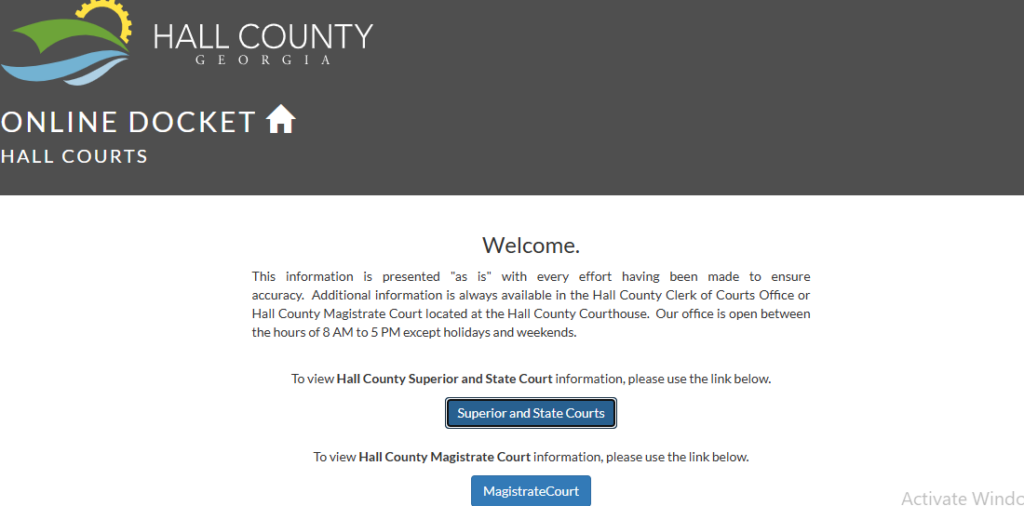
The Hall County Court Calendar helps users find court dates, hearing schedules, and case-related events. Users can search within the hall county court by date, case number, party name, or court division to locate upcoming proceedings and review scheduling details for active cases.
Official Search Tool URL: https://docket.hallcourts.com/
Steps to Use the Calendar:
- Open the official court calendar website.
- Select Superior and State Courts or Magistrate Court.
- Choose a search method.
- Enter the requested search details.
- Click Search.
- Review matching results.
- Open a case to view hearing information and court dates.
Searching by Date
A date search helps users locate hearings scheduled on a specific day. The calendar displays hearing dates, courtroom assignments, judges, and scheduled proceedings for the selected date range.
Steps to Search by Date:
- Open the court calendar tool.
- Select a court division.
- Choose a date or date range.
- Click Search.
- Review the hearing schedule results.
Searching by Case or Party Name
A court docket search allows users to find a case using a case number or party name. Search results may show court dates, hearing schedules, filing information, case status, and docket entries.
Steps to Search by Case Number or Party Name:
- Enter the case number or party name.
- Select the appropriate court division.
- Click Search.
- Open the matching case record.
- Review available case details and upcoming hearings.
Search Tips:
- Use the complete case number for accurate results.
- Verify spelling before searching by name.
- Check multiple court divisions if the case location is unknown.
- Review the calendar regularly for schedule updates.
This layout is cleaner, avoids duplicate tool placements, improves user flow, and aligns better with SEO best practices.
Types of Court Calendars in Hall County
Hall County utilizes a multi-tiered judicial system, where each branch maintains a specific court docket to manage its daily operations and caseloads. Navigating these various calendars is essential for legal professionals and citizens, as scheduling methods vary significantly by jurisdiction. The trial calendar for the Superior Court often features complex criminal and civil litigation requiring multi-day proceedings. In contrast, the Magistrate and Probate courts handle higher volumes of shorter matters, such as warrant applications or estate filings, leading to more frequent entries on their public schedules. Each court operates under local rules to ensure due process by providing clear notice of when and where a case will be heard. By centralizing these schedules—whether online or at the courthouse—Hall County ensures transparency and efficiency within its legal infrastructure, allowing for the timely resolution of all disputes and criminal matters.
Superior Court Calendar
The Superior Court handles the most serious legal matters in Hall County, including felony criminal cases and major civil disputes. Its calendar is primarily focused on upcoming hearings such as arraignments, bond reconsiderations, and motion hearings. Because several judges may be presiding simultaneously, the calendar provides specific courtroom assignments within the Hall County Courthouse to ensure attorneys and defendants report to the correct location.
Magistrate Court Calendar
Often referred to as the “People’s Court,” the Magistrate Court manages high-volume cases like small claims, evictions, and county ordinance violations. The court dates in this jurisdiction are typically set in rapid succession. The hearing schedule is often organized into morning and afternoon blocks, allowing the court to process numerous warrant applications and preliminary hearings efficiently in a single day.
Probate Court Calendar
The Probate Court is responsible for matters involving wills, estates, guardianships, and marriage licenses. Its court schedule is generally specialized and dictated by statutory deadlines for filing petitions. While many probate matters are handled administratively, the calendar also tracks formal trial dates for contested estates or guardianship disputes that require a judge to hear evidence and witness testimony.
Juvenile Court Calendar
Focusing on cases involving minors, the Juvenile Court manages delinquency, dependency, and CHINS (Children in Need of Services) cases. The hearing schedule is managed with a high degree of confidentiality to protect the privacy of the children involved. This calendar tracks various court events, such as detention hearings and periodic judicial reviews, ensuring that each case meets the strict timelines required by Georgia’s Juvenile Code.
Navigating the Hall County Court Calendar
The Hall County judicial calendar provides a clear overview of the daily court docket, ensuring transparency for all legal proceedings. It tracks various court events, including the specific hearing schedule and court session times for each presiding judge. By organizing trial dates and courtroom assignments in a centralized format, the county allows legal professionals and the public to navigate the justice system efficiently and stay informed of all upcoming requirements.
Types of Court Events
- Hearings: Specific meetings where legal arguments are presented or bond conditions are set.
- Trials: Formal proceedings where a judge or jury decides the final outcome of a civil or criminal case.
- Motion Days: Designated days for judges to rule on preliminary legal requests or procedural issues.
- Jury Sessions: Specific weeks reserved for jury selection and the trial of cases requiring a peer-review verdict.
How Court Sessions are Scheduled
Scheduling is managed through the Clerk of Court’s office in coordination with the presiding judges. Dates are typically established based on the “term of court,” ensuring a predictable rotation for different case types. However, emergency or expedited sessions can be added to the docket at the court’s discretion to address urgent legal matters or public safety concerns.
Courtroom Location Assignments
To ensure security and efficient movement within the facility, every event on the calendar is assigned a specific courtroom number and floor. These assignments are listed on the official court website and are displayed on digital kiosks throughout the Hall County Courthouse lobby to assist visitors in finding the correct location for their specific case.
Reading the Hall County Court Calendar
The Hall County calendar is organized systematically to provide clarity for all users at a glance. It typically begins with columns for the scheduled date and time, followed by the specific case number and the names of the parties involved. Further columns specify the presiding judge and the exact courtroom assignment to guide attendees to the correct physical location. Additionally, a “Special Notes” section provides critical updates regarding case continuances or jury duty instructions, ensuring all participants are fully informed and prepared for their scheduled judicial appearance.
- Date / Time Columns: Indicates exactly when the session is scheduled to begin.
- Case Number / Party Names: Identifies the specific legal matter and individuals involved.
- Courtroom / Judge Assignment: Directs users to the correct floor and presiding official.
- Special Notes: Highlights important changes such as continuances or jury duty requirements.
Understanding Court Codes and Abbreviations
Hall County utilizes specific codes and abbreviations to condense complex legal information within its calendar entries. These shorthands allow the clerk to communicate the purpose of a hearing, such as a Motion to Dismiss or an Arraignment, without requiring excessive text. Interpreting these codes correctly is vital for understanding the procedural status of a case and preparing for the hearing. Users should look for these labels in the “Action” or “Type” column to determine exactly what legal matter will be addressed during the session.
- MTD: Motion to Dismiss
- ARR: Arraignment (Formal reading of charges)
- CONT: Continued (Rescheduled for a later date)
- PH: Preliminary Hearing
- MOT: Motion Hearing
- BW: Bench Warrant (Issued for failure to appear)
Upcoming Hearings and Trial Notifications
In Hall County, staying informed about upcoming hearings involves a formal process of digital and physical notifications. Attorneys and parties receive direct notices via mail or electronic filing, while the public can access the trial calendar through the Clerk of Court’s website. These updates are essential for coordinating the hearing schedule and various court events, ensuring due process is maintained. By centralizing these notifications, Hall County minimizes administrative errors and ensures all participants have a fair opportunity to prepare for their specific judicial proceedings.
Courtroom Assignments
Courtroom assignments are clearly displayed on the judicial calendar next to each case entry, often listed by a specific room number or floor. These designations ensure that participants report to the correct presiding judge without confusion. To locate your courtroom, check the digital monitors in the main lobby or the printed daily docket posted near the elevators. It is recommended to arrive early to account for security screenings and to verify your assignment, as last-minute changes occasionally occur due to judicial availability or case volume.
- Location Check: Verify the floor and room number on the official daily posting.
- Security: Allow extra time for courthouse security checkpoints before your session.
- Judge Name: Match the presiding judge listed on the calendar with the courtroom door.
- Information Desk: Utilize the courthouse help desk if your case number is not appearing.
Court Calendar Updates and Changes
The Hall County court calendar is dynamic, frequently requiring court schedule updates due to legal continuances, trial rescheduling, or pre-trial settlements. Administrative factors like emergencies, weather, or public holidays also necessitate hearing changes. To stay current, participants should regularly check the official online portal for real-time adjustments. While attorneys receive automated email notifications, others can contact the clerk’s office for official notices. Staying vigilant ensures participants avoid missed appearances and successfully navigate the shifting timelines of the Hall County judicial system.
- Continuances: Granted requests to move a case to a later date.
- Emergencies: Unexpected closures due to weather or safety concerns.
- Settlements: Cases removed from the calendar after parties reach an agreement.
- Online Portal: The primary source for the most up-to-date digital docket information.
How to Stay Informed
- Online Portal: The Clerk of Court website offers the most up-to-date digital version of the docket.
- Email Notifications: Registered legal professionals receive automated alerts regarding their specific cases.
- Court Clerk Notices: Physical notices are mailed to the last known address of the parties involved in a case.
- Information Desk: Calling the specific court’s administrative assistant can provide clarity on the day’s proceedings.
Hall County Court Locations
Identifying the correct Hall County court locations is essential for timely attendance at any legal proceeding. While the majority of the county’s judicial functions are centralized in the main courthouse complex in Gainesville, each specific court operates out of dedicated offices and floors. It is vital to consult your official calendar to verify the correct courtroom locations and courthouse directions before your scheduled appearance.
Superior Court Location
The Superior Court is the highest-level court in Hall County, presiding over felony criminal cases and major civil litigation. Because multiple judges may be hearing cases at once, visitors should check the daily postings at the main entrance to find their specific assigned courtroom.
- Address: 225 Green St SE, Gainesville, GA 30501
- Phone: 770-531-7025
- Check-in: Enter through the main Green Street security checkpoint and view digital monitors for floor assignments.
Magistrate Court Location
Commonly referred to as the “People’s Court,” the Magistrate Court handles high-volume cases such as evictions, small claims, and warrant applications. It is located within the same main courthouse facility but operates on a rapid schedule with specific morning and afternoon sessions.
- Address: 225 Green St SE, Gainesville, GA 30501
- Phone: 770-531-6912
- Parking: The most convenient parking is the public deck located directly across from the courthouse entrance.
Probate Court Location
The Probate Court manages sensitive matters involving wills, estates, and guardianships, as well as administrative services like marriage licenses. This office is designed for accessibility to ensure all citizens can handle their legal affairs efficiently and with the necessary privacy.
- Address: 225 Green St SE, Gainesville, GA 30501 (2nd Floor)
- Phone: 770-531-6921
- Accessibility: Fully ADA-compliant with elevator access located near the main security lobby.
Juvenile Court Location
The Juvenile Court is dedicated to cases involving minors, including delinquency and dependency matters. Because these proceedings are confidential, the court enforces strict visitor rules to protect the identity of the children and families involved in the legal process.
Visitor Rules: Mandatory check-in at the Juvenile Court reception desk; no unauthorized photography or recording allowed.
Address: 225 Green St SE, Gainesville, GA 30501
Phone: 770-531-6927
Frequently Asked Questions
The Hall County judicial calendar is an essential tool for tracking upcoming hearings and managing daily legal responsibilities. Because the court calendar is subject to frequent revisions, understanding how to access the most current hearing schedule is vital for participants. This section addresses common inquiries regarding how to navigate the digital docket, track case changes, and ensure compliance with court-ordered appearances. By staying informed through these resources, individuals can successfully manage their legal timelines and avoid the consequences of missed court dates.
How often is the Hall County Court Calendar updated?
The court calendar is typically updated in real-time or daily to reflect the most current judicial actions. As new motions are filed or cases are settled, the Clerk of Court adjusts the digital judicial calendar to ensure accuracy. It is highly recommended to check the schedule both 24 hours before your appearance and on the morning of the hearing to account for any last-minute changes or administrative adjustments.
Can I view the court calendar for past dates?
While the primary public view focuses on upcoming hearings, historical records of past dockets can often be accessed through the Clerk of Court’s online portal. If the data is no longer visible on the live hearing schedule, individuals may need to request specific case minutes or records directly from the clerk’s office. Maintaining these records is essential for verifying past appearances and understanding the procedural history of a case.
How do I know if my case date has changed?
Notifications for hearing schedule changes are usually sent via mail or electronic notification to the parties involved or their legal counsel. However, the fastest way to confirm a change is to search the court calendar online using your case number. If you see a “Continued” (CONT) status or a new date listed, that entry serves as the most current update to your scheduled appearance.
Can I search for hearings by attorney name?
Yes, the Hall County online judicial calendar search tool allows users to filter results by attorney name, party name, or case number. This feature is particularly useful for legal firms managing multiple upcoming hearings across different courtrooms. Searching by name provides a consolidated view of all matters an attorney is scheduled to handle within a specific timeframe, improving coordination and efficiency.
Is the court calendar legally binding for attendance?
The court calendar serves as official public notice, but your formal obligation to attend is usually based on a subpoena, court order, or bond agreement. Missing a scheduled appearance on the judicial calendar can result in serious legal consequences, including the issuance of a bench warrant or the dismissal of a civil claim. Always prioritize the dates listed on the official schedule and consult with an attorney if a conflict arises.