Hall County Probate Court serves as the primary judicial body responsible for overseeing the legal distribution of assets and the protection of vulnerable citizens within the community. As a cornerstone of the local justice system, the court handles the complex estate administration process to ensure that the final wishes of decedents are honored and legal obligations are met. Whether you are navigating the validation of wills or managing an intestate estate, the court provides the necessary framework to guide families through the technical inheritance process during difficult times. Beyond property matters, the court also carries the significant responsibility of appointing guardians and conservators for those unable to manage their own personal or financial affairs. By maintaining a fair and transparent environment, the court ensures that all legal proceedings are conducted with the highest level of integrity and respect for Hall County residents. Through its various administrative functions, it remains an essential resource for those seeking clarity and closure regarding family legal matters.
Hall County Probate Court provides residents with direct access to essential documentation and public records needed for a wide range of personal and legal activities. To facilitate smooth legal filings, the court offers a comprehensive collection of probate forms that assist individuals in petitioning for letters of administration or seeking year’s support. Users visiting this page can also learn how to search for historical probate records, which are vital for genealogical research and verifying property ownership or distribution. In addition to estate matters, the court is the official entity responsible for issuing marriage licenses and processing applications for weapons carry permits within the county. The staff is dedicated to helping the public navigate these procedures by offering clear instructions and maintaining an organized system for all filed documents. By providing these centralized services, the court ensures that the administrative needs of the public are met with professionalism and efficiency every day.
How to Search Hall County Probate Court Records
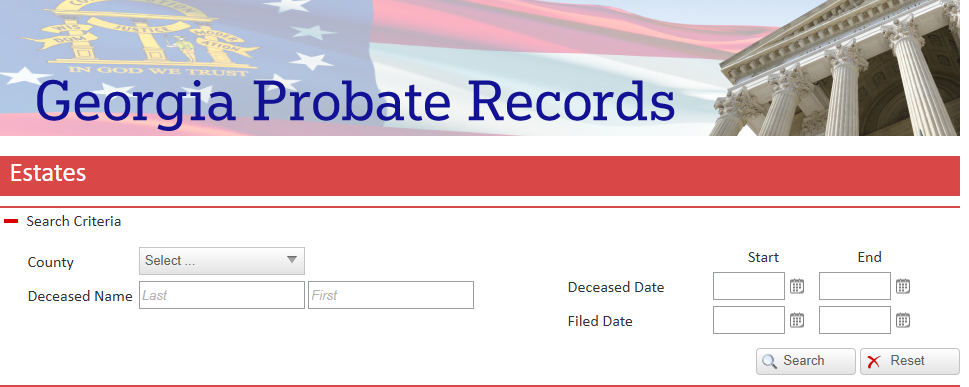
Hall County probate records can be searched through the official Georgia Probate Records portal by selecting the Estates option. Users can locate estate cases, wills, probate filings, executors, and estate administration records using several search methods available within the system.
Official Probate Records Search Portal : https://www.georgiaprobaterecords.com
The Georgia Probate Records portal provides online public record search tools for participating probate courts. Users searching Hall County probate records should begin by selecting the Estates section from the homepage, where records associated with the Hall County Court probate system may be available for search and review.
Open the Estates Search
The Georgia Probate Records portal homepage is organized into several record categories, allowing users to search different types of probate court records from one location. Each category serves a specific purpose and contains records related to particular court proceedings. Users searching for wills, estate administration cases, executors, beneficiaries, or probate filings should select the Estates section to begin their probate records search.
To search probate records:
- Visit the official probate records website.
- Click Estates from the homepage.
- Wait for the estate search page to load.
The Estates section contains records related to probate proceedings, estate administration, wills, executors, administrators, and related court filings.
Search by Case Number
A case number search usually provides the fastest and most accurate result. Every probate matter filed with the court receives a unique case number that acts as an identifier throughout the probate process. Entering the complete case number into the search field helps users locate a specific estate record without sorting through multiple search results. This method is especially useful for executors, beneficiaries, attorneys, and family members who already possess probate paperwork or court notices.
This search method works best for users who already have:
- Court notices
- Probate paperwork
- Estate correspondence
- Previous court filings
Search by Estate Name
Users who do not know the case number can perform an estate search using the deceased person’s name. Entering the full legal name often produces the most accurate results and helps narrow the list of matching records. This search method is commonly used by family members, heirs, beneficiaries, attorneys, and researchers seeking probate case information. If several probate cases contain similar names, the system may return multiple results that require further review.
For more accurate results:
- Include middle names when available.
- Verify spelling carefully.
- Review filing dates shown in the results.
- Compare estate information before opening a case.
Search by Decedent Name
A decedent name search helps users locate probate records when a case number is unavailable. Users can enter the deceased person’s full name to search for estate filings, probate proceedings, and related court records. Using the correct spelling and full legal name often improves search accuracy and helps identify the correct estate case more quickly.
Search by Filing Year
If the approximate filing date is known, users can narrow results by entering a filing year. This search option helps reduce large result lists and can make the probate records search process much faster. Filing year searches are particularly useful when a case number is unavailable but the user knows when the probate proceeding was opened or filed with the court.
A filing year search is helpful when:
- Multiple estates have similar names.
- The case was filed many years ago.
- Only limited case information is available.
Review Search Results
After submitting a search request, the system displays a list of matching probate records based on the information entered. Users should carefully review each result to identify the correct estate file. The number of results returned depends on the search criteria used, with broader searches often producing multiple records that require additional review.
Search results often include:
- Estate name
- Case number
- Filing date
- Probate court location
- Case status
- Executor information
- Attorney information
- Estate type
The information displayed may vary depending on court record availability.
Open the Estate Record
After locating the correct probate case in the search results, users can open the estate record to view the information made available by the court. The record details page serves as the main source of information for a probate case and may contain filing information, case status updates, party details, and other court-related data. The amount of information displayed varies based on the case type, record availability, and court policies.
Depending on public access settings, users may find:
- Probate petitions
- Estate administration filings
- Executor appointments
- Administrator appointments
- Will-related documents
- Court proceedings
- Hearing information
- Estate status updates
Narrow Search Results
If too many records appear, users can refine the search by adding more information to the available search fields. Broad searches often return multiple estate cases with similar names, making it harder to locate the correct probate record. Using additional details can significantly reduce unrelated results and improve the accuracy of the probate records search.
Helpful filters include:
- Full legal name
- Filing year
- Case number
- Executor name
- Attorney name
Using additional search details often produces more accurate results.
Search Through Court Assistance
If an online probate records search does not locate the desired file, Hall County Probate Court staff may provide information about available public records, search procedures, and record request options. Court assistance can be useful when search results are incomplete, case details are unknown, or older probate records are unavailable through the online database. Staff may help users identify the correct case information needed to continue a probate records search, though they cannot provide legal advice.
Before contacting the court, gather:
- Estate name
- Case number
- Filing year
- Decedent name
- Executor name
Having this information available can help court staff locate the correct probate case more efficiently.
Common Probate Search Mistakes
Many search issues occur because of simple data entry errors. A small mistake in the search fields can prevent the probate database from displaying the correct record. Taking a few moments to verify the information before submitting a search can improve accuracy and reduce the time spent reviewing unrelated results.
Avoid these common mistakes:
- Entering an incomplete case number
- Misspelling the estate name
- Searching the wrong filing year
- Using unofficial third-party websites
- Leaving search fields too broad
A careful probate records search can help users locate estate information faster and improve the accuracy of court case lookup results.
Hall County Probate Court Records
Probate court records provide the official history of asset distribution and family protection cases within the local judicial system. These probate records help the public verify who has legal authority over property and which heirs receive a share of the legacy. In some cases, related filings or supporting matters may also involve the Magistrate Court, depending on the nature of the legal proceedings. Probate court records document legal proceedings involving estates, wills, trusts, guardianships, and conservatorships. These records help individuals confirm estate administration details, identify court-appointed representatives, and review decisions related to inheritance and asset distribution.
Types of Probate Records Available
Probate court records include several categories of papers that track family affairs and property rights for every local family. These files store estate files where the court lists every piece of land and cash belonging to a person. And they hold the original court documents that name the certain heirs of a family home. Since people need to protect their loved ones, the court keeps legal records for guardianship cases. So every step of the process appears in these files for people to review.
- Estate cases: These track houses, land, and bank accounts.
- Will records: These store the final written wishes of the deceased.
- Guardianship cases: These files detail the care of minor children.
- Conservatorship files: These manage the money for those who need help.
Information Found in Probate Records
Probate records contain unique data points that help people track the timeline of estate proceedings from start to finish. Each file shows a case number and the date someone first contacted the office for help. So users can quickly find the name of the person managing the property. When a debt gets paid, the court puts that receipt inside the official file. As the case moves forward, these court documents provide updates on whether the judge closed the file yet. So the public sees everything.
- Case number: The unique code used to find a file.
- Filing date: Marks when the legal process first began.
- Executor details: Name of the person in charge of assets.
- Estate status: Shows if the file is open or closed.
Public Access to Probate Records
Probate court records remain open to the public so that everyone can witness the fair treatment of property in the community. And many people use these court documents to build family trees or prove they own a certain lot. Since the law values transparency, you can visit the office to view these estate files in person. So this openness prevents secrets and keeps the system honest for every family. When a person needs a copy, the clerk provides a stamped version for a fee.
Restrictions on Certain Records
Probate records sometimes hide sensitive facts to protect the personal safety of the people involved in a case. And the judge seals probate case information related to mental health or bank account numbers. Since identity theft is a risk, the court redacts social security numbers from all legal records. So the public can see the result but not the private details of a neighbor’s health. As a result, people feel safe filing papers knowing the court keeps their most personal facts away from view.
Hall County Probate Court Forms
People use Hall County probate forms to begin legal actions for estates and guardianships. These probate forms provide a clear way for residents to communicate their needs to the court system. The clerk makes these standard documents available to keep the local legal process organized. By using the right estate paperwork, families ensure the judge reviews their requests without delays. These official templates cover everything from validating a written will to protecting a minor child inside the county.
Common Probate Forms
Hall County probate forms offer a structured way to petition the court for various legal permissions. These court forms ensure that the judge receives all the facts needed to make a fair ruling. Each probate application focuses on a specific need, such as proving a will or starting an estate. And families use these legal filing forms to ask for a guardian for a minor child. So the clerk provides the probate petition to help people follow the rules correctly. When finished, the legal process moves forward smoothly.
- Petition for Probate: Use this to start the process for a deceased person.
- Will Filing Forms: These papers verify the original written wishes.
- Estate Administration Forms: Track the money and property of the estate.
- Guardianship Forms: Request the legal right to care for a child.
- Conservatorship Forms: Ask for permission to manage someone’s bank accounts.
When Probate Forms Are Required
Residents use probate forms to transfer property ownership after someone dies. These legal filing forms apply when a person cannot make their own health choices. If a person dies with a house, the family must file a probate petition to update the deed. So this estate paperwork proves who the new owner should be today. When a child receives money from insurance, the court requires a probate application to keep the cash safe. Since the judge protects everyone, these court forms act as the official start.
How to Complete Probate Forms
Completing probate forms involves writing down the names of all heirs and listing all property. Accuracy on every probate application helps avoid delays and ensures the judge has the right data. Families must write the addresses of all family members on the probate petition. When people finish the papers, they often sign them before a notary to make everything official. Since the court needs facts, people should check the estate paperwork for errors before filing. If mistakes happen, the clerk requires a new court form.
Filing Requirements
Filing probate forms usually requires a fee and the submission of original documents to the clerk. These legal filing forms must meet strict standards to be accepted by the Hall County court. People must pay the fee when they submit a probate application for the very first time. Since the judge needs original papers, residents avoid sending blurry copies. When people file estate paperwork, they keep a copy for their own records at home. So people can track the case as the court reviews their court forms.
Probate Filing Process in Hall County
Probate filing begins when a person submits a formal petition and the original will to the Hall County Clerk of Court. This process initiates the legal transfer of a deceased person’s property to their heirs and ensures all debts are settled correctly. The court filing process ensures that the law recognizes the new owners of houses, vehicles, and bank accounts within the community. Following these steps helps families keep property records clear and protects the rights of every heir involved. This local system acts as a shield to ensure the final wishes of a loved one are honored exactly as written.
Determine Whether Probate Is Required
The probate filing process is not always required for every piece of property a person leaves behind in the county. If assets have a joint owner or a named beneficiary, they move outside the succession process automatically. And families should check bank accounts for “payable on death” labels before they start a probate application. Since some assets avoid court, you might not need to open a full case for small amounts. So checking the titles of cars and houses is the first logical step for any family today.
- Check deeds for joint tenancy with right of survivorship.
- Look for named beneficiaries on life insurance policies.
- Review bank accounts for transfer-on-death or payable-on-death settings.
Gather Estate Documents
Once you decide to move forward, you must find the original papers for the estate administration to begin at the courthouse. And the court needs the original signed will rather than a copy to verify the person’s final wishes. Since the judge looks for specific signatures, these court documents must be in good condition. So gather the death certificate and a list of all known family members before you visit the clerk. When you have every paper ready, the court filing process becomes much easier for everyone.
- Original Last Will and Testament.
- Certified Death Certificate from the health department.
- Full list of names and current addresses for all legal heirs.
File Initial Probate Petition
The probate filing officially starts when you submit the probate petition to the Clerk of Court for review. And this document asks the judge to recognize an executor to lead the estate administration tasks. Since the court uses standard forms, you must fill out every section about the deceased person and their property. So the clerk takes your papers and your filing fee to create a new case file. When the file is open, you receive a case number to track the legal progress of the property.
Notify Beneficiaries
After the probate petition reaches the court, the law requires you to tell all heirs about the case immediately. And this step ensures that every family member has a chance to see the probate application and the will. Since transparency matters, you might send letters by certified mail or place a notice in the local newspaper. So the court waits for proof that everyone knows about the succession process before the judge signs any orders. When notices are sent, the clock starts for any legal replies or questions.
Court Review Process
A judge or a clerk reviews the probate filing to make sure everything follows the state laws in Hall County. And they check the court documents for missing signatures or errors in the family tree. Since the court must be careful, this part of the court filing process might take a few weeks to finish. So the judge might ask for a hearing if any heirs disagree with the probate petition. When the judge is satisfied, they sign the letters to grant you the legal right to move assets.
Asset Distribution
The final part of estate administration involves paying the debts and giving the property to the rightful heirs. And the executor must use the power from the probate filing to sign new deeds for houses. Since all bills must be paid first, the court tracks the spending through the final estate paperwork. So once the heirs have their property, the executor asks the court to close the file. When the judge signs the final order, the succession process is officially over for the family.
- Pay all valid debts and taxes from the estate funds.
- Distribute remaining cash and property to the named heirs.
- File a petition for discharge to close the case with the court.
Estate Administration Process
This process involves identifying assets and settling debts to clear the path for family inheritance. And by following these steps, the court makes sure every bill is paid and every heir receives their fair share. So these rules help the town stay organized when a person passes away.
What Is Estate Administration?
Estate administration is the legal procedure where a chosen person manages the assets and debts of someone who passed away. This court-monitored system makes sure the property moves safely from the deceased to the rightful heirs. Estate administration acts as the formal path for closing a person’s life chapters and financial accounts in the county. And this process requires a court-appointed leader to take charge of all houses, cars, and bank accounts. Since the judge oversees the work, the community knows that the property goes to the rightful owners. So this estate management keeps the local economy moving by preventing assets from being locked away. As a result, families find a clear way to move forward after a loss while following the law.
Responsibilities of the Executor
A personal representative holds the legal power to act on behalf of the estate assets during the entire process. And these fiduciary responsibilities mean the leader must put the interests of the heirs above their own personal gain at all times. Since the court monitors their actions, the estate administrator must follow all executor duties and keep accurate logs of every dollar spent. So they start by making a full estate inventory of all items. When the list is done, the fiduciary keeps the property safe.
- Securing physical property like houses and vehicles.
- Opening an estate bank account to hold funds.
- Tracking all income and expenses for the court.
Paying Debts and Taxes
Debt settlement is a high priority because the law requires all bills to be paid before any family member receives money. And the personal representative uses the estate funds to satisfy funeral costs and final medical bills. Since taxes are part of this duty, the fiduciary files a final return to make sure the government is paid correctly. So this estate management task protects the heirs from being sued by old creditors later on. When the bills are clear, the estate is ready for the final step of the process.
Distributing Assets
Distributing assets is the final goal of estate administration once all legal requirements are met and all bills are paid. And the personal representative follows the written instructions left in the will to give property to the family. Since some people die without a will, the judge uses state laws to decide which relatives get the house. So this step completes the legal transfer and allows the family to take ownership of their legacy. As the heirs sign for their items, the fiduciary prepares to close the case for good.
Wills and Probate Information
A person writes a will to control who receives their property after they die. This legal document must pass through a court review to prove it is the real and final version. The court acts as a gatekeeper to ensure that only valid papers guide the asset transfer. These documents help the judge identify the right family members for the inheritance. By following these rules, the legal system prevents confusion and protects the legacy of the deceased person.
What Makes a Will Valid?
A valid will requires a clear signature from a person who is of sound mind and acting freely. And they must sign the paper in front of at least two witnesses who also sign the document. Since these steps protect the future, many people use estate planning to ensure their wishes stay legal and strong. So a properly signed testament helps the judge verify the true intent of the deceased. When these rules are met, the court can grant inheritance rights to the chosen heirs without any delay.
How Probate Courts Review Wills
The court review begins when the clerk looks at the physical condition and signatures on the papers. And the judge confirms that the testament follows all state laws before the case moves forward. Since the judge looks for any signs of fraud, the original paper must be present for inspection. So this process protects the legal heirs from someone using a fake or old version of a plan. When the review ends, the executor receives the official power to start managing the family property and bank accounts.
Contesting a Will
A legal challenge happens when someone believes the testament is unfair or fake. And they might argue that the deceased person was pressured into signing the paper against their own will. Since these disputes can stop the case, the judge holds a hearing to listen to all the evidence. So this process aims to protect the inheritance rights of the family from being stolen by trickery. When the judge hears the facts, they decide if the document remains valid for the legal heirs to use.
- The person was not of sound mind when signing.
- Someone forced the person to sign the paper.
- The signatures on the paper are not real.
- A newer version of the will exists.
Probate With No Will
When no written plan exists, the judge uses the law to find the closest family members. And the court follows intestate succession to ensure the property stays within the biological family line. Since there are no specific wishes, the judge treats every relative according to their legal rank on the family tree. So this system provides a fair way to distribute assets even without prior estate planning by the deceased. As a result, the law protects the inheritance rights of children and spouses through a clear set of rules.
- Spouse: Usually receives a large share of the property.
- Children: Receive an equal share of the remaining assets.
- Parents: May receive property if there are no children or spouse.
- Siblings: Inherit if no closer relatives are living.
Guardianship and Conservatorship Cases
The court uses guardianship and conservatorship cases to protect those who cannot care for themselves. These legal tools allow the judge to choose a trusted helper for an incapacitated adult or a minor child. This legal process ensures that every protected person stays safe and receives proper medical care. The court monitors the actions of every legal guardian to prevent any form of neglect or theft. These cases remain a top priority for judges who want to keep the community safe.
What Is Guardianship?
Guardianship is a legal status where the court gives a person the power to make daily choices for someone else. This usually happens for a child or an incapacitated adult who cannot handle their own health or safety needs. And the court-appointed guardian chooses where the protected person lives and what medical care they receive each day. Since the judge wants the person to stay safe, they check the background of the helper. So this role focuses on the person rather than their money. As the case moves forward, the guardian reports to the judge once a year.
- Decides on housing and living arrangements.
- Makes medical and health care choices.
- Ensures the person receives daily care and food.
- Reports personal status to the judge annually.
What Is Conservatorship?
Conservatorship focuses on the financial management of a person’s bank accounts, property, and monthly income. The court chooses a helper to pay bills and protect the savings of an incapacitated adult or a child. And the protected person keeps their assets though the helper manages the daily spending. Since money can be stolen, the court requires the helper to show regular reports of all spending and income. So this system keeps the person’s house and life savings safe from any bad actors. This prevents any waste of the person’s money.
- Pays monthly bills and taxes.
- Manages bank accounts and investments.
- Protects real estate and physical property.
- Files financial reports with the court.
Filing a Petition
To start the case, a family member or friend must file a petition to explain why the person needs help. And this paper tells the court that a neighbor or relative is an incapacitated adult who can no longer make safe choices. Since the court needs proof, the petition often includes a doctor’s report about the health of the person. So the clerk reviews these papers before the judge sets a date for a hearing. When the papers reach the court, the legal process for protection starts. This step ensures that help arrives for the person in need.
Court Review and Approval
The court review and approval process involves a judge listening to facts about the health and safety needs of the person. And the judge may send a special visitor to meet the protected person and check on their home life. Since taking away rights is a big step, the court makes sure the legal guardian is the best fit. So the judge signs the final papers only when they feel the person will be safe. When the papers are signed, the helper receives the official power to act. This oversight keeps the helper honest.
Probate Court Fees and Costs
The court requires payment to process legal papers and maintain public records for every estate case. These court fees cover the cost of clerk time and the use of the judicial system for the family. People should plan for these estate expenses before they start a new petition at the courthouse. This ensure that the case moves forward without any sudden delays or money problems.
Filing Fees
The clerk collects filing charges at the start of every new case to cover the administrative work. For example, petitioning to probate a will in solemn form usually costs around $162.00 in Hall County. And people should expect similar court fees for starting an estate with no will. Since postage and service costs are extra, the final bill often reaches $200.00 or more. So checking the current price list ensures you bring the right amount of money for the clerk today.
- Probate of Will (Solemn Form): $162.00 (plus service and postage).
- Letters of Administration (No Will): $162.00 (plus service and postage).
- Petition for Year’s Support: $162.00.
- Marriage License: $77.00 (or $37.00 with a certificate of counseling).
- Weapons Carry License: $75.00 (Renewal costs around $30.00).
Administrative Costs
Beyond the first petition, several administration costs apply to the daily management of the legal file. The court charges a small fee for every certified copy of letters or orders you need for the bank. And you must pay for newspaper notices which often cost between $80.00 and $100.00 depending on the length. Since these estate expenses are mandatory, the personal representative pays them directly from the estate bank account. So keeping a ledger helps track these small payments for the final report for the judge.
Attorney Expenses
Many families hire a lawyer to help with the paperwork and follow the state laws. And these legal bills count as estate expenses that the personal representative pays from the family bank account. Since the judge allows for fair pay, the lawyer receives money for their time spent at the courthouse. So you should talk about these prices before you sign a contract with any firm. When the work is done, the court reviews the total pay to ensure it stays within a fair range for the community.
Other Probate Costs
Other court fees might include the cost of a surety bond to protect the heirs from any mistakes. And the estate might pay for an appraiser to find the true value of the family home or car. Since these facts help the judge, the estate pays for these services before the final distribution happens. So keeping a list of all these administration costs helps you stay organized throughout the year. When the case closes, every dollar spent appears on the final report for the clerk.
Location and Contact Information
The Hall County Probate Court operates from a central office in Gainesville to serve the legal needs of all local residents. This department manages everything from estate filings to marriage licenses during standard business hours each week.
Hall County Probate Court Address
The Hall County Probate Court address serves as the main hub for all estate matters and license applications in the local area. This probate court location stays within the main courthouse building to offer a safe place for families to handle their business. And the probate office handles every courthouse address inquiry with care and speed for the town. Since the building is a major landmark, the probate division remains easy for the public to find. So this site acts as the primary spot for all court filings today.
- Physical Address: 225 Green Street SE, Gainesville, GA 30501
- Building: Hall County Courthouse
- Location: Ground Floor
Office Hours
The court hours offer plenty of time for people to submit their papers or ask the clerk for help. And these probate office hours remain steady throughout the year to help the community stay on track. Since the court follows the standard holiday schedule, the doors stay locked on all state and federal holidays. So the best filing times occur early in the day to beat the afternoon crowds. When planning your trip, verify the date to avoid driving to a closed building for your legal needs today.
- Monday to Friday: 8:00 AM – 5:00 PM
- Closed: Saturdays, Sundays, and Government Holidays
Contact Information
People use the probate court contact number to reach the clerk’s desk for any immediate needs or case updates. And this phone line offers probate assistance for those who have questions about fees or hearing dates. Since the team provides many court services, they help people find the right papers for their specific legal tasks. So calling before you drive to the office helps you prepare everything for your visit. Then the staff can help your family find the right data for the case.
- Main Phone: (770) 531-6921
- Fax Number: (770) 531-3945
Directions and Parking Information
Finding courthouse parking is easy because a large public lot sits right next to the building for every guest. And these spots provide a clear path for visitor entry for people with disabilities or those using public transit. If you are in the city, following the court directions toward Green Street SE leads you straight to the main entrance. So visitors enter through the front doors and follow the signs for the probate desk. When you enter, security checks keep everyone safe inside the building today.
Frequently Asked Questions
People find answers here about how the court manages property and family protection cases. This section clarifies the legal steps for managing an estate or caring for a loved one. The court provides these facts to help the community stay informed about local legal rules. By reading these answers, families can prepare for their visit to the courthouse with confidence. This resource helps every resident see the rights and duties involved in the legal system today.
What does Hall County Probate Court do?
The court manages the distribution of property after a death and issues several types of legal licenses. And it also oversees the safety of minor children and adults who cannot look after themselves. The court handles the daily legal work to ensure every bill is paid and every heir receives property. This judicial body validates wills and appoints leaders to manage family assets. And the court issues marriage licenses and permits for weapons to local residents. The judge protects the community through a fair legal system.
How can I perform a probate case search?
You use a computer terminal at the office or use the online probate case search tool to find files. The clerk keeps these files so the public can see how the court handles a person’s property. People start by using the computer terminals located inside the clerk’s office for a quick look. You only need a last name or a case number to find the specific file. And the clerk can help you find older records stored in the vault. So these papers allow you to verify property transfers today.
How do I file for probate in Hall County?
To how to file probate, you must bring the original will and a death certificate to the clerk’s office. This action tells the court that a person has died and their property needs a new owner. Since the court needs to be official, you must sign the papers in front of a notary. And you must pay the filing fee when you hand in your papers to the clerk’s desk. So the filing marks the start of the legal steps for the family to take ownership today.
How does the estate administration process work?
The estate administration process starts when the court appoints a leader to handle the property and debts of the deceased. This leader finds all assets and pays every bill before the inheritance distribution can happen. And the court monitors every step to ensure the family follows the local laws. Since creditors have a right to be paid, the process usually takes several months to finish. So this system provides a fair path for the heirs to receive their legacy after the bills are clear today.
What are the main executor responsibilities?
The main executor responsibilities involve finding every asset and keeping the property safe for the heirs. They must act with honesty and report every dollar spent to the judge for review. One of their duties is to make a full list of everything the person owned, including land and jewelry. And they must open a special bank account to hold the estate money. Since they hold a position of trust, they must keep their own cash separate from the family funds in every case.